
Two cleans, one trough
Eavestrough Cleaning in Summer and in Storm Season
A summer clean and a November clean empty the same eavestrough, but the debris, the tools and what we can check are different. Here is how to choose between them.
Customer reviews
What customers say
Came out and quoted my gutters the same day I requested it! Came out and cleaned my gutters and did some repair while they were up there for a reasonable price! Going to use them for my windows in the spring. Great service
Amazing! Sent in a request form on their website in the morning, heard back that afternoon, and booked for the next day. Very fast, reliable, and efficient.
They are efficient, hardworking, and reliable. I’ll definitely call them again for other services. Highly recommended!

Why us
Why customers love our service
And why you will get the best gutter cleaning service in Nanaimo!
Fast and efficient gutter cleaning
We turn up on the day we said, clear the whole run, and get off your property without stretching the job out.
Clear and quick communication
You get an answer when you call or text, a price before we start, and a straight account of what we found up at the roof edge.
The best gutter cleaning you have ever had
Consistent five-star reviews from the homeowners we work for.
1000+ happy customers
More than a thousand customers have had us out to clear their gutters.
- A method picked for the season and the state of the debris
- Soaked mats scooped into a bucket, never sprayed down the wall
- Dry litter lifted out without churning up roof grit
- A hose-pressure rinse along each run once the solids are out
- Every downspout run with water and checked at the base
- All of it bagged and driven away
Before and after
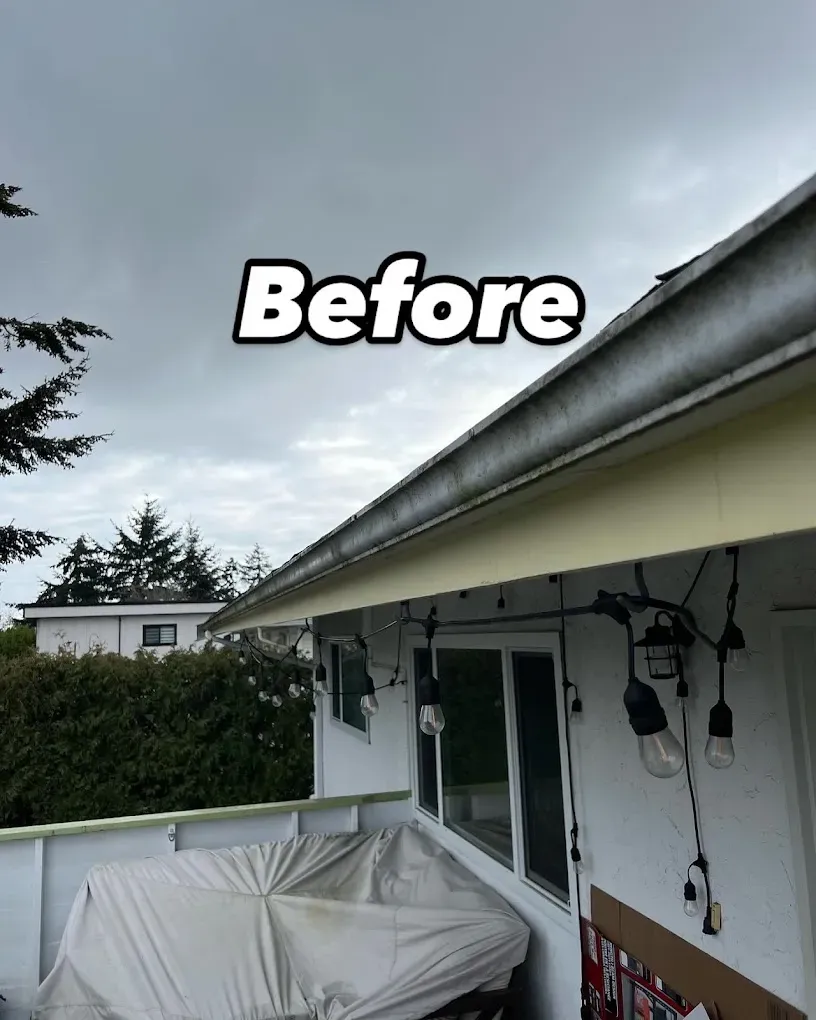
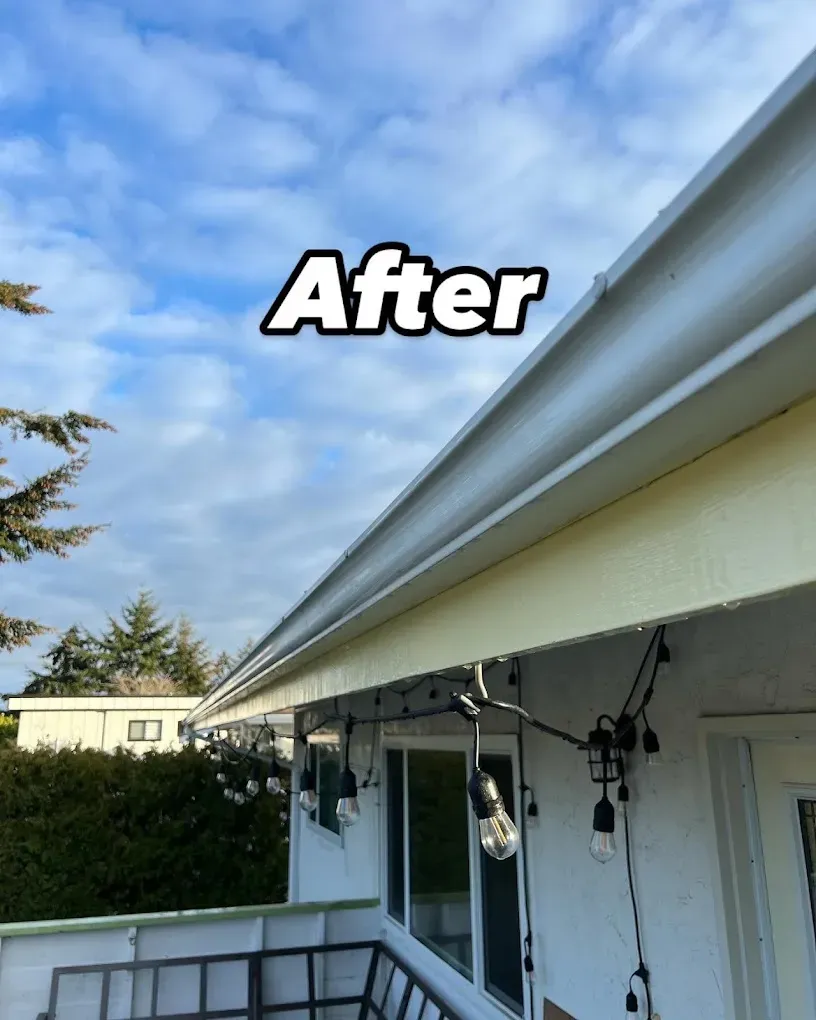
The same gutter, before and after
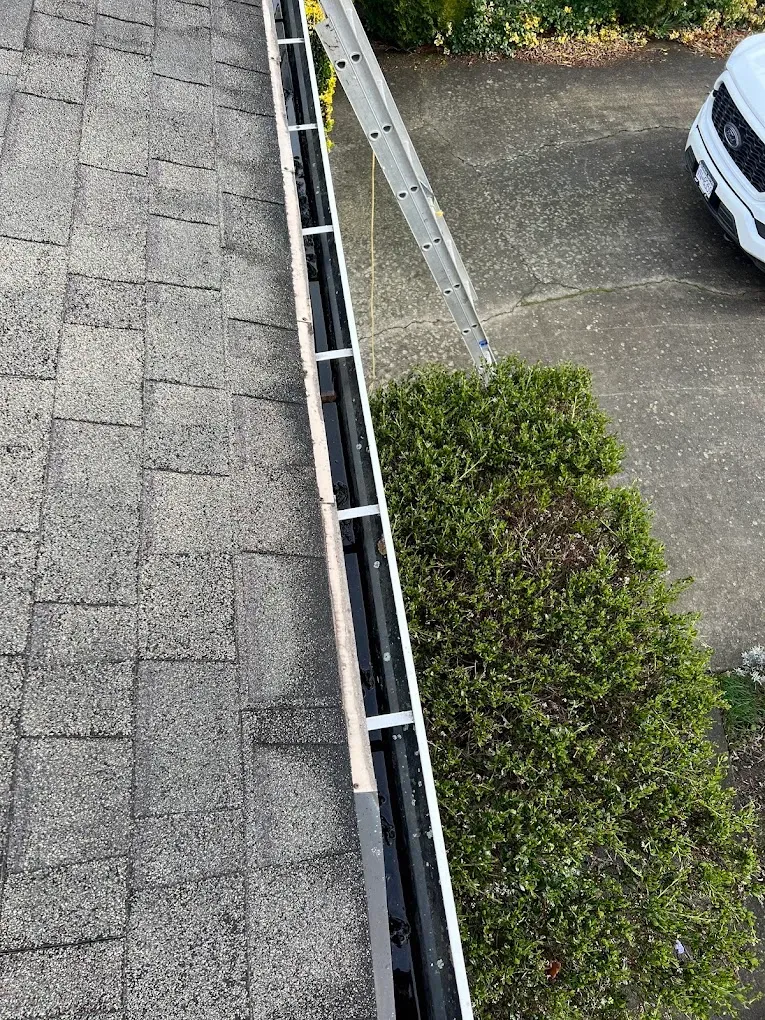
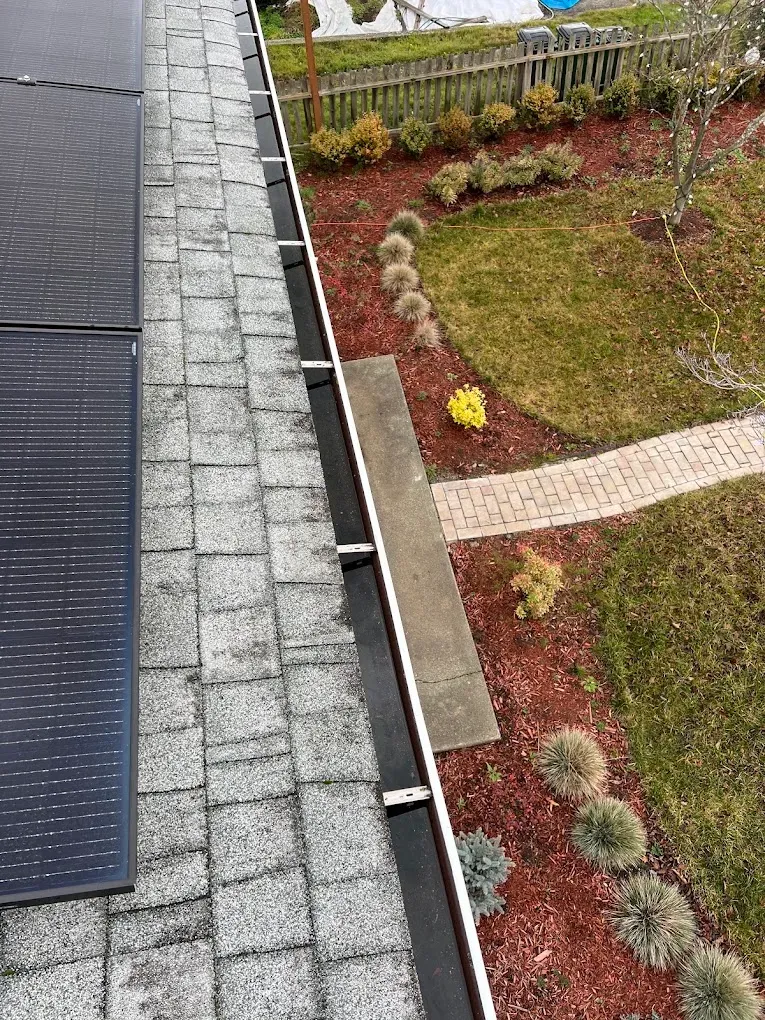
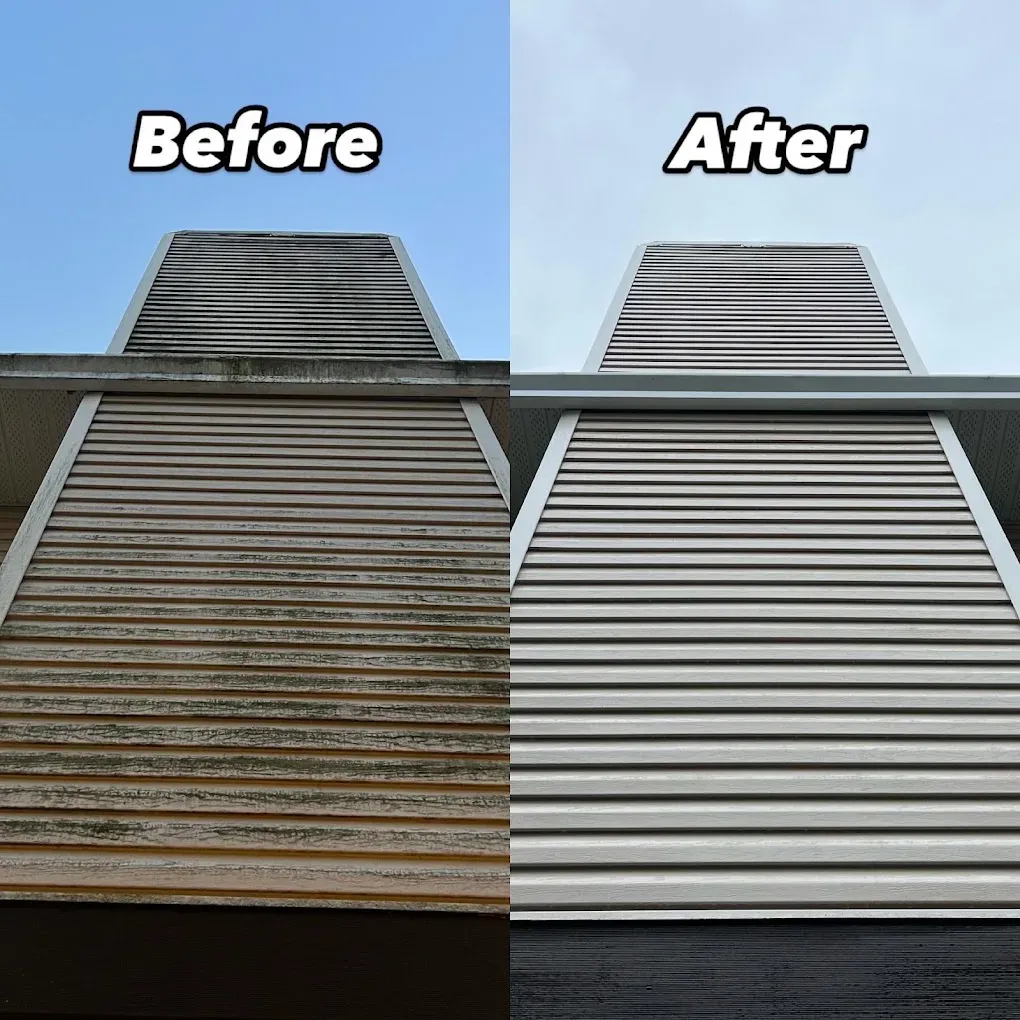
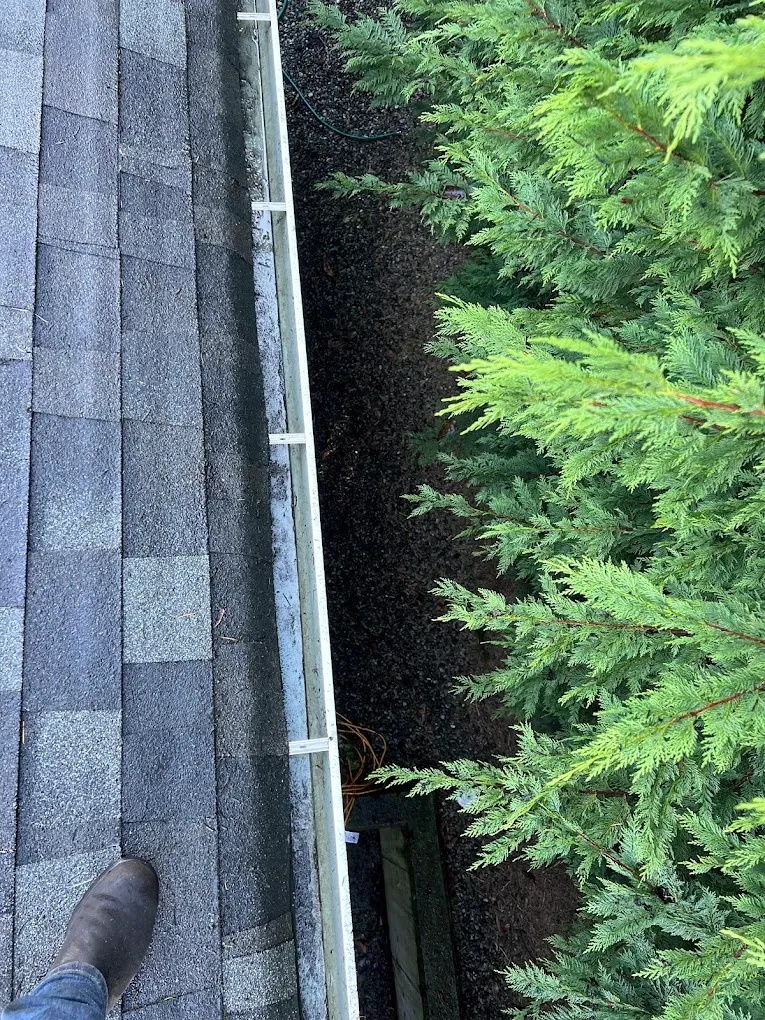
Photographed from the same spot before we started and again once we had finished.
An eavestrough gets cleaned two quite different ways depending on the month. In August the debris is dry, light and sitting still. In November it is waterlogged, heavy and still arriving. We treat these as two separate jobs, because the tools, the pace and what we can check along the way all change with the weather. Which one your house needs, or whether it needs both, depends on the trees over it and how the gutters coped last winter.
The dry-season clean
From June to early September, Nanaimo is warm and dry, and the eavestroughs show it. What sits in them is crisp: last winter’s needles dried to a brown felt, maple bud scales from spring, a scattering of seed keys, and roof grit washed down by the last rains. On lots near the water, arbutus adds its own summer contribution, dropping tough leaves and papery strips of red bark through the hottest weeks. Those troughs are filling while most others sit quiet.
Dry debris is easy to lift. We scoop it out by hand along each run and, where it is truly dust-dry and nothing below would catch the spray, finish small sections with a blower. The trough bottom is visible straight away.
That visibility is the real reason to book in summer. With the metal dry we can see the slope properly, spot a hanger that has started to lean, find the seam that has been weeping, and look at the fascia board while it is not soaked. If a repair is needed, summer is also when sealant cures best.

The storm-season clean
From October to March the trough is a different place. The rains arrive with the fall wind, and the trees let go together. Bigleaf maple leaves come down in waves through October and November. Douglas fir and western red cedar shed hard in the first storms. Everything lands wet and stays wet.
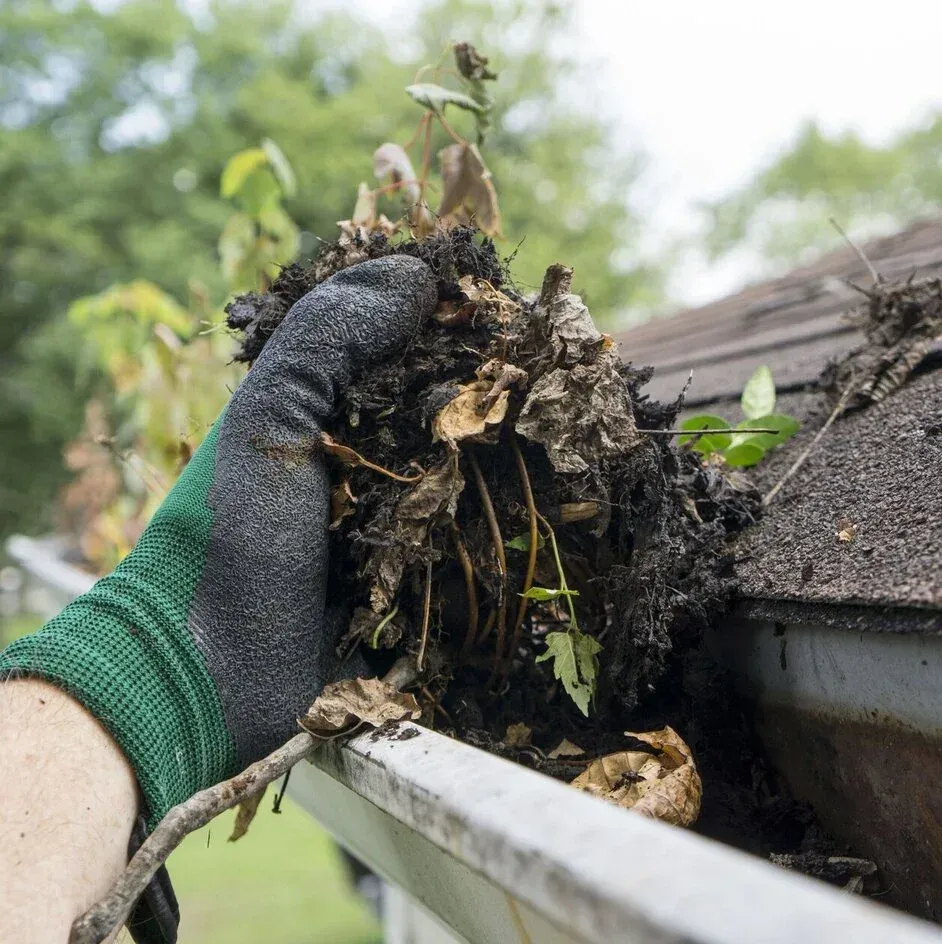
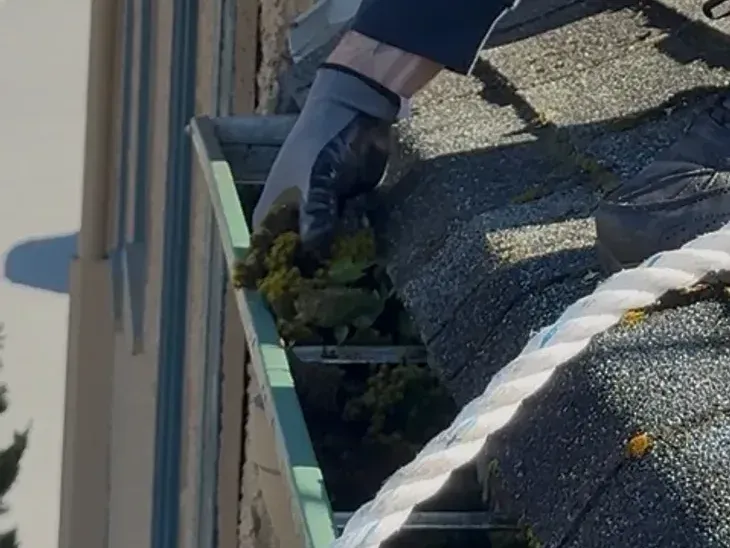
A soaked fir mat behaves like wet felt. It sits flat on the trough bottom, holds water, and lets rain run over the top of it and off the front edge. Air will not move it, and a hose jet only shoves it toward the outlet where it jams tighter. So in storm season everything comes out by hand, scooped into a bucket and tipped into a bag as we move along. It is slower, heavier work, and on a big house it takes noticeably longer than the same house in August.
Wind matters here too. Winter storms off the Strait of Georgia drive rain sideways and push leaves and needles onto the sheltered side of the roof. On houses facing the water, such as along the Hammond Bay and Departure Bay shoreline, the lee-side troughs are often the packed ones while the windward side is fairly clear.
How it works
Getting Your Gutter Cleaning Booked
Simple from start to finish. Tell us about your home, get a straightforward quote, and let us handle the dirty work.
Tell us about your home
A few details are all we need.
Send us your address, number of storeys, and anything important about the property—trees, access, or a tricky roofline.
Get your quote
We price the job, not a generic house.
Size, height, roofline, access, and debris all matter. We'll give you a clear quote before we start.
We handle the dirty work
You don't need to climb the ladder.
We clear the gutters, clean the downspouts, flush the system, and take the debris with us.
You know what we found
We'll let you know if we spot something.
Loose bracket? Leaking seam? Drainage issue? We'll give you a straightforward heads-up.
That's it.
- You tell us about the house.
- We give you a clear quote.
- We clean the gutters.
- You get one less chore to worry about.
Ready to get your gutters cleaned? Get your quote and let us handle the dirty work.
The rinse at the end, in either season
Once the solids are out, we run water along each eavestrough at ordinary hose pressure. In summer that rinse shows us the slope clearly, because any pooling stands out on dry metal. In winter its job is mainly to carry the last grit to the outlet and prove the downspout is open. Either way, we wait at the bottom of the downspout until water comes out at full flow before calling the run done.
Signs the last clean was in the wrong month
Some houses get cleaned every year and still overflow every winter. Usually the visit is landing in the wrong window. Water spilling over the front edge in the first December storm, a fresh layer of maple leaves sitting in a trough that was emptied in early October, or green moss creeping along the bottom by February all point the same way. The clean happened before the trees were done, or too long before the rain. Moving the date by a few weeks often fixes it without adding a visit.
Picking your season
Three things decide it for most houses.
What is overhead. Maples decide the fall date. Book once they are bare, usually late November, or accept that an October clean may need a second pass. Fir and cedar shed more steadily, so homes under conifers do well with a summer clean and a storm-season clean.
Exposure. Homes facing the water or sitting high on the slopes catch more wind, and wind loads the troughs between visits.
Whether you want an inspection. If you want a proper look at the condition of the eavestroughs, summer is better. If you just want them flowing before the wettest months, the storm-season visit is the one that counts.
The work
On the job
Getting on the calendar
Storm-season dates go first. If you already know you want a late-fall clean, get in touch in September and we will set aside the week that suits your trees. Summer visits are easier to place, and we can often fit them in within a short wait. Quotes are free, and if you are not sure which season your house needs, ask. We will tell you what we would do with our own.
Why choose us
Why choose us for eavestrough cleaning
Season-aware
A crisp August trough and a sodden November one are different jobs. We bring the right kit for the month you book.
Hands before hoses
Solid debris is lifted out first. Water is only for rinsing and testing, not for pushing muck around.
Straight timing advice
If your maples are only half bare, we will say a later date gets you more for the visit.
Insured and WCB-registered
Insured and WCB-registered, locally owned, with 10+ years on Vancouver Island rooflines.
Got questions?
Eavestrough questions
Eavestrough or gutter: which word is right?
Both. Eavestrough is the older Canadian name, and plenty of Nanaimo homeowners still use it. Gutter is the word most people search for.
They mean the same metal channel at the edge of your roof, and we clean them the same way.
Is a summer clean worth it if the troughs look empty from the ground?
Often, yes. From the ground you see the front lip, not the bottom of the trough. A thin layer of needles and roof grit can sit there all summer and turn to sludge with the first rain.
A summer visit also gives us the best look at the slope and the seams, while everything is dry.
Why do my eavestroughs overflow even though they were cleaned in September?
Most likely the fall drop came after the clean. Bigleaf maple leaves and the first big fir shed of the season usually arrive with the October and November storms.
A clean in early fall is still useful, but under maples it often needs a second pass once the trees are bare.
Can you clean eavestroughs while it is raining?
In steady light rain, usually yes. The debris is wet through from October onward anyway.
We will not work in strong wind, heavy downpours or on an icy roof edge. If it is not safe at the top of a ladder, we move the booking.
Do you use a leaf blower or a pressure washer?
A blower only on bone-dry summer litter, and only where it will not spray across your windows. Never a pressure washer inside the trough.
High pressure throws sludge up the siding and can open the sealant at the seams. Hose pressure is all a rinse needs.
My roof faces the water. Does that affect timing?
It can. On homes facing the Strait of Georgia, winter wind drives leaves and needles onto the sheltered side of the roof, so that side can fill up between storms.
Waterfront homes under big trees sometimes benefit from a late-winter check as well as the fall clean.
What if there are weeds or small trees growing in the trough?
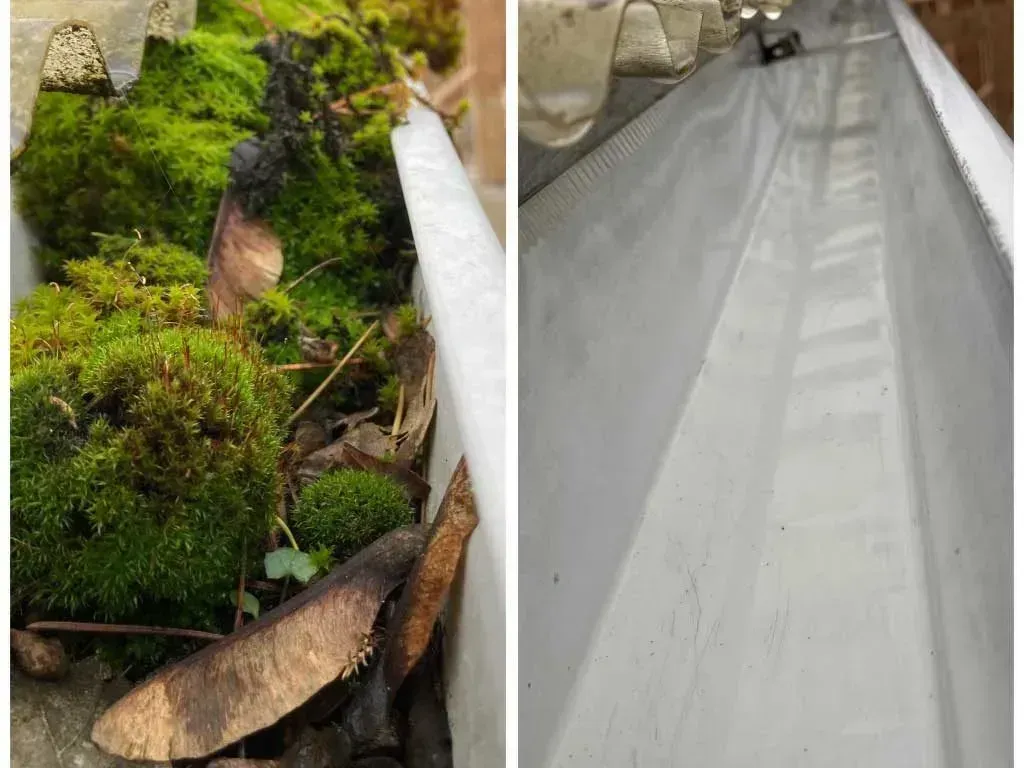
We pull them out by the roots along with the soil they are growing in. That soil is old debris that has been there for a few seasons.
Once the trough is empty, we look closely at the hangers underneath, because that much weight can bend them.
Do I need a summer clean and a fall clean every year?
Not every house does. Homes under heavy fir, cedar or maple usually do best with both. Homes on open lots often manage with one storm-season clean.
If you would like the visits planned for you, see gutter maintenance.
Eavestrough Cleaning in Nanaimo and the mid-Island
Tell us the address and we will get you a price.